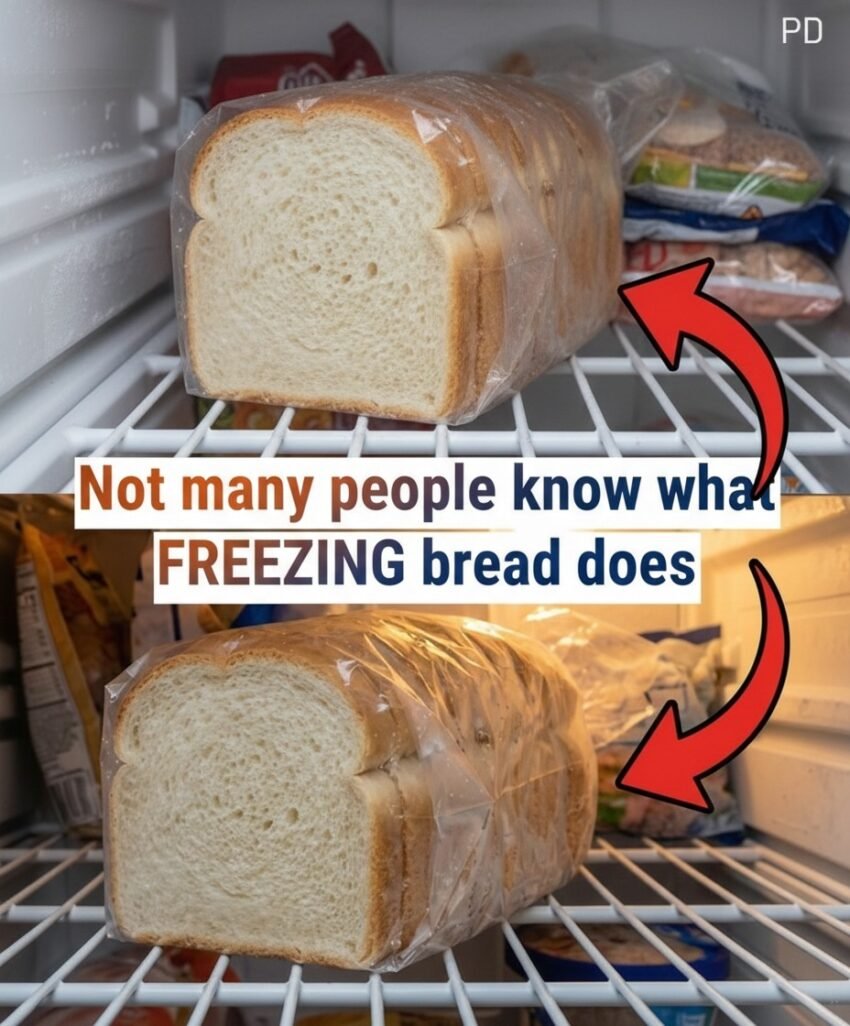
Freezing bread is actually one of the best ways to extend its life—but a few things happen to it when you do:
❄️ What freezing does to bread
1. Stops staleness (temporarily)
Bread goes stale بسبب a process called starch retrogradation (the starch recrystallizes).
Freezing pauses this process, so the bread stays in its current state.
👉 If you freeze it fresh → it will taste fresh when thawed
👉 If you freeze it stale → it stays stale
2. Locks in moisture
At freezer temperatures, water inside the bread turns to ice, preventing it from evaporating.
- This helps prevent the bread from drying out
- But if not wrapped properly, you’ll get freezer burn
3. Changes texture slightly
After thawing:
- Bread may feel a bit softer or slightly drier
- Crusty breads (like baguettes) lose their crispness
💡 You can fix this by reheating in an oven or toaster
4. Prevents mold growth
Mold can’t grow in freezing temperatures, so:
- Bread lasts weeks to months instead of days
🥶 How long it lasts
- Best quality: 1–3 months
- Still safe longer, but taste/texture decline over time
👍 Best way to freeze bread
- Slice it before freezing (so you only take what you need)
- Wrap tightly (plastic wrap + freezer bag)
- Remove as much air as possible
🔥 Best way to thaw
- Toast directly from frozen ✅
- Or leave at room temperature (still wrapped)
- For whole loaves: warm in oven for a few minutes
Bottom line
Freezing doesn’t “ruin” bread—it pauses time for it.
Just freeze it while it’s fresh and store it properly, and you’ll get almost the same taste back.
If you want, I can show you a trick bakeries use to make frozen bread taste nearly identical to fresh.
