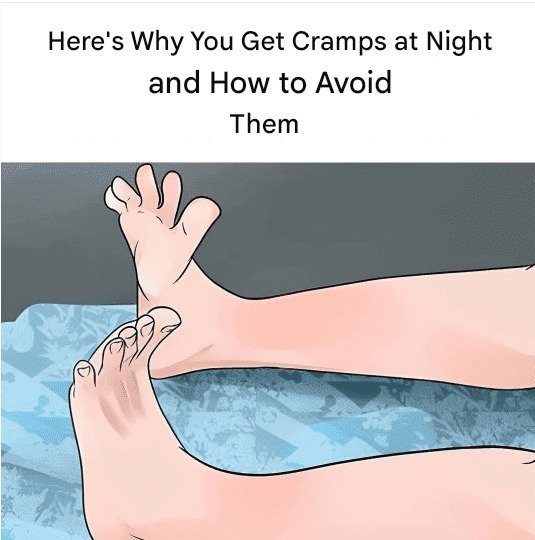
Night cramps (often in the legs or feet) are very common—and the viral explanations are usually oversimplified. The truth is, they happen due to a mix of muscle fatigue, nerve activity, and body chemistry.
Here’s what’s actually going on 👇
🌙 Why cramps happen at night
⚡ 1. Muscle fatigue
If you’ve:
- Walked a lot
- Stood for long hours
- Exercised more than usual
Your muscles are more likely to cramp when you finally relax.
💧 2. Dehydration
Low fluid levels can affect how muscles contract and relax properly, increasing the chance of cramps.
🧂 3. Electrolyte imbalance
Minerals like potassium, magnesium, and calcium help control muscle function.
If they’re low:
- Muscles may contract अचानक and painfully
🛏️ 4. Sleeping position
Certain positions (like pointed toes) shorten muscles, especially in the calf:
- This can trigger sudden cramps during sleep
🔌 5. Nerve signals misfiring
Cramps are linked to abnormal nerve activity that tells a muscle to contract suddenly and forcefully.
⚠️ 6. Underlying conditions (sometimes)
Frequent or severe cramps may be linked to:
- Diabetes
- Peripheral artery disease
- Hypothyroidism
💊 7. Certain medications
Some drugs (like diuretics) can alter fluid and mineral balance.
❌ Common myths
- “It’s always بسبب low potassium” → not always
- “It only happens to older people” → can happen at any age
- “It’s dangerous” → usually harmless, just painful
🧠 What helps prevent them
- Stay hydrated 💧
- Stretch calves before bed
- Avoid overexertion late in the day
- Maintain balanced nutrition
🆘 What to do during a cramp
- Stretch the muscle (pull toes upward for calf cramps)
- Massage gently
- Stand or walk if possible
✔️ Bottom line
Night cramps usually come from a mix of fatigue, hydration, and muscle/nerve factors—not one single cause.
If you want, I can give you a quick 1-minute bedtime routine that significantly reduces night cramps.
