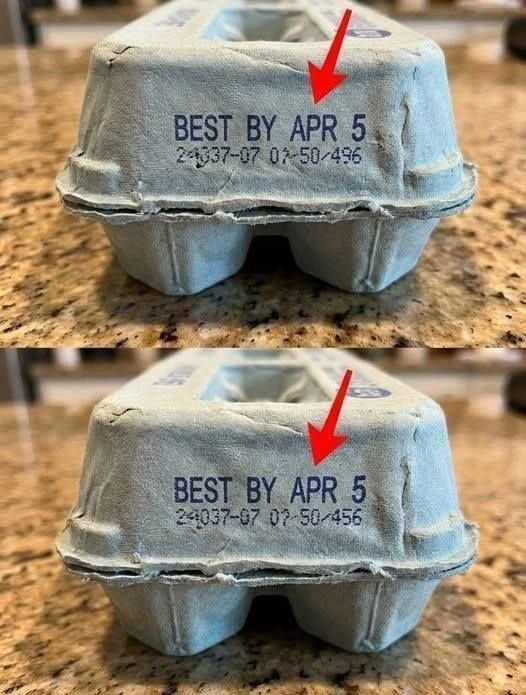
Ah, I know exactly what you’re talking about! Most people glance at the “expiration date” on eggs without realizing there’s a more important date hidden in plain sight: the “pack date” or Julian date. This little detail can actually tell you how fresh your eggs really are. 🥚
What to look for on an egg carton
- Expiration / “Best By” Date
- Tells you when the eggs should ideally be used by, but it’s not always the most precise indicator of freshness.
- Pack Date (Julian Date)
- A 3-digit number (001–365) representing the day of the year the eggs were packed.
- Example: “032” = February 1st (32nd day of the year).
- Eggs are usually good for 3–5 weeks after the pack date if stored properly in the fridge.
- Use-By / Sell-By Date
- Mostly for retailers, not always the freshest indicator for you at home.
Why it matters
- Many people buy eggs based on the expiration date alone, not realizing that eggs can still be fresh for a week or two beyond that date if the pack date was recent.
- Conversely, eggs can be close to a month old even if the expiration date seems far away if they were packed early.
💡 Quick freshness test at home:
- Fill a glass with water and gently place the egg inside:
- Sinks and lays flat → very fresh
- Sinks but stands upright → still good, but not super fresh
- Floats → discard (it’s gone bad)
If you want, I can make a simple cheat sheet for buying eggs that are truly fresh—so you never have to guess and avoid buying eggs that are borderline old.
Do you want me to do that?
