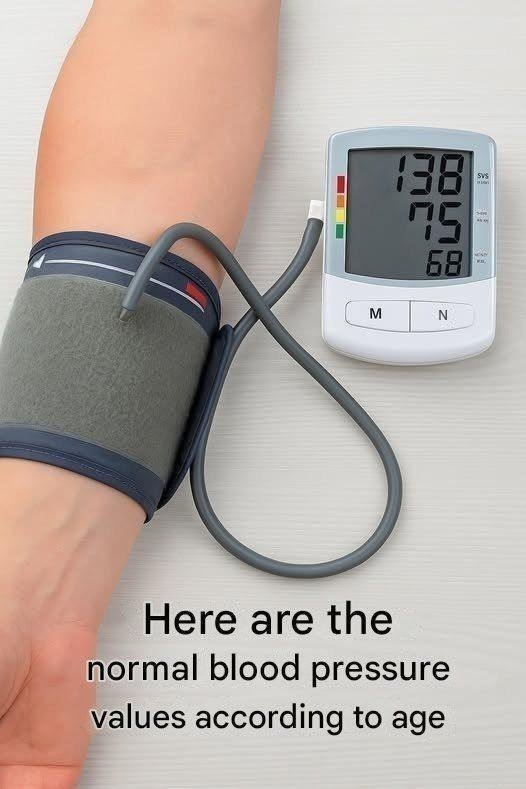
The idea that blood pressure has very different “normal” values by age is a bit misleading. The healthy target range is generally similar for adults, though doctors may allow slightly higher readings in older people depending on overall health.
Here’s a clear, medically grounded guide:
🩺 Normal Blood Pressure (Adults)
- Ideal: Less than 120 / 80 mmHg
- Elevated: 120–129 / less than 80
- High (Hypertension): 130 / 80 or higher
This classification is based on widely used guidelines like those from the American Heart Association.
📊 Typical Ranges by Age (General Guidance, Not Strict Rules)
Children & Teens
- Varies by age, height, and gender
- Roughly: 90/60 to 120/80
Adults (18–59 years)
- Target: <120/80 mmHg
- Doctors aim to keep it below 130/80
Older Adults (60+)
- Ideal: Still around <130/80 if healthy
- In some cases, doctors may accept slightly higher (e.g., up to 140/90) to avoid dizziness or falls
⚠️ Important Points
- Blood pressure naturally rises slightly with age, but “higher is okay” is not entirely true
- Consistently high readings increase risk of:
- Heart disease
- Stroke
- Kidney problems
💡 When to Take Action
- If readings are consistently 130/80 or higher, it’s worth discussing with a doctor
- 180/120 or higher → medical emergency
✅ Simple Tips to Keep It Healthy
- Reduce salt intake
- Stay active (walking daily helps a lot)
- Maintain a healthy weight
- Manage stress and sleep well
- Stay hydrated
Bottom Line
There isn’t a completely different “normal” for each age group—the goal is generally to keep blood pressure as close to 120/80 as possible, with slight flexibility as you get older.
If you want, I can create a simple chart you can save on your phone to quickly check if your blood pressure is normal or not.
