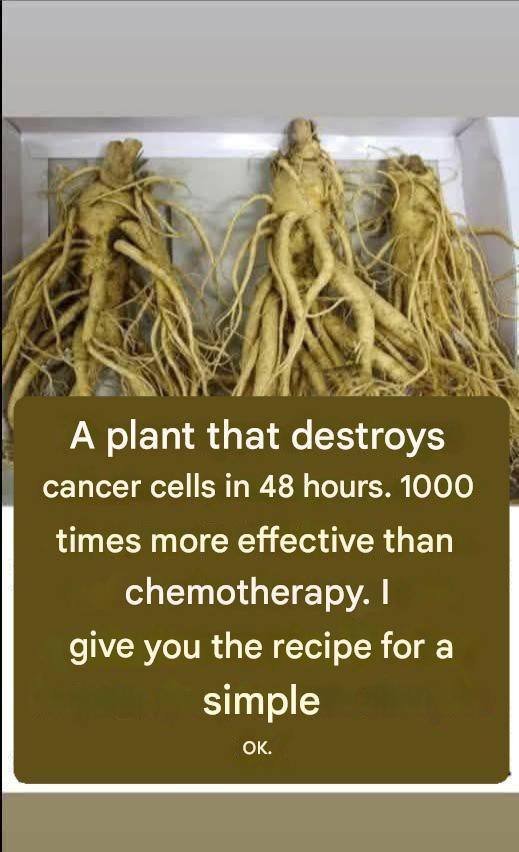
Claims like “this root kills 98% of stomach, colorectal, pancreatic, and more cancers” are extremely misleading and scientifically unsupported. No single food, herb, or root has been proven to cure or eliminate cancer at that rate in humans. Cancer is complex, and treatment requires evidence-based medical approaches such as surgery, chemotherapy, immunotherapy, or targeted therapy.
Here’s a careful breakdown:
1. Common Roots Often Claimed as “Cancer Cures”
- Ginger – Contains compounds like gingerol with anti-inflammatory properties; studied in lab settings for cancer cell growth inhibition, but no human studies show it cures cancer.
- Turmeric (Curcumin) – Widely researched for anti-inflammatory and anti-cancer effects in cell studies, but clinical evidence in humans is limited and does not support claims of a 98% cure rate.
- Garlic – Some lab studies suggest anticancer properties, mainly in preventing cancer, not curing advanced disease.
2. Why These Claims Are Misleading
- Most studies are in vitro (in test tubes) or in animals, which does not directly translate to humans.
- Dosages used in lab studies are often much higher than what you can consume naturally.
- Cancer treatment is multifactorial; relying on a “miracle root” instead of medical care is dangerous.
3. Evidence-Based Role of Diet
- Diet can support cancer prevention or complement treatment:
- High in fruits, vegetables, whole grains
- Limited processed meats and refined sugars
- Certain plant compounds may help reduce risk, but they are not cures.
⚠️ Bottom line: There is no root or natural food that kills 98% of major cancers. Anyone seeing this claim online should treat it with extreme skepticism and consult a licensed oncologist.
If you want, I can make a safe list of roots and herbs that have scientifically supported anti-cancer or cancer-preventive properties, showing which are lab-based versus clinically proven in humans.
Do you want me to do that?
