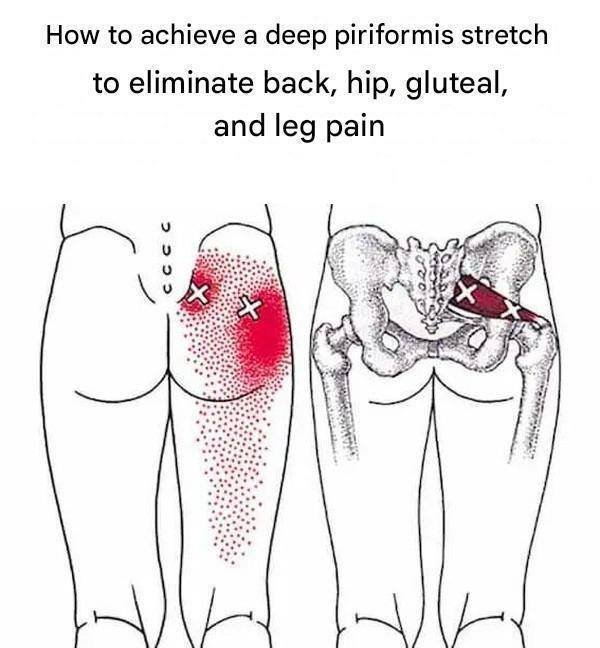
The piriformis muscle is a small muscle deep in the glutes that can cause pain in the lower back, hips, buttocks, and down the leg if it becomes tight or inflamed—a condition often linked to sciatica. Achieving a deep, effective stretch can relieve tension, improve mobility, and reduce pain. Here’s a step-by-step guide:
1. Seated Figure-Four Stretch
Target: Piriformis, glutes, hips
- Sit on a firm chair with both feet flat on the floor.
- Cross your right ankle over your left knee, forming a “4” shape.
- Keep your back straight and gently lean forward from the hips until you feel a deep stretch in your right glute/hip.
- Hold 30–60 seconds, then switch sides.
- Tip: Avoid rounding your lower back; hinge from the hips.
2. Supine Piriformis Stretch (Reclined Figure-Four)
Target: Deep piriformis for sciatic relief
- Lie on your back with knees bent and feet flat.
- Cross your right ankle over your left knee.
- Reach through and grab your left thigh, gently pulling it toward your chest.
- Keep your head and shoulders relaxed on the floor.
- Hold 30–60 seconds, breathing deeply. Switch sides.
3. Pigeon Pose (Yoga Variation)
Target: Deep hip and glute stretch
- Start in a plank or downward dog position.
- Bring your right knee forward toward your right wrist; your shin can angle slightly.
- Extend your left leg straight back behind you, keeping hips square.
- Lean forward over your bent leg for a deeper stretch.
- Hold 30–90 seconds, switch sides.
- Tip: Use a cushion under the front hip if it doesn’t reach the floor comfortably.
4. Standing Piriformis Stretch
Target: Quick stretch for on-the-go relief
- Stand upright and cross your right ankle over your left knee (like a figure-four).
- Sit back slightly as if sitting into a chair.
- Keep your core engaged and chest lifted.
- Hold 30–60 seconds, switch sides.
🔑 Tips for Maximum Effect
- Warm up first: 3–5 minutes of walking or light cardio improves stretch effectiveness.
- Breathe deeply: Exhale while sinking into the stretch to relax the muscle.
- Consistency: Daily stretching is most effective for long-term relief.
- Combine with foam rolling: Rolling the glute and piriformis region can help release tight fascia before stretching.
- Avoid pain: Mild tension is normal; sharp or radiating pain indicates you may be overstretching.
If you want, I can create a 5-minute deep piriformis routine that combines stretches, foam rolling, and mobility movements for complete back, hip, glute, and leg relief—it’s easy to do at home daily.
Do you want me to create that routine?
