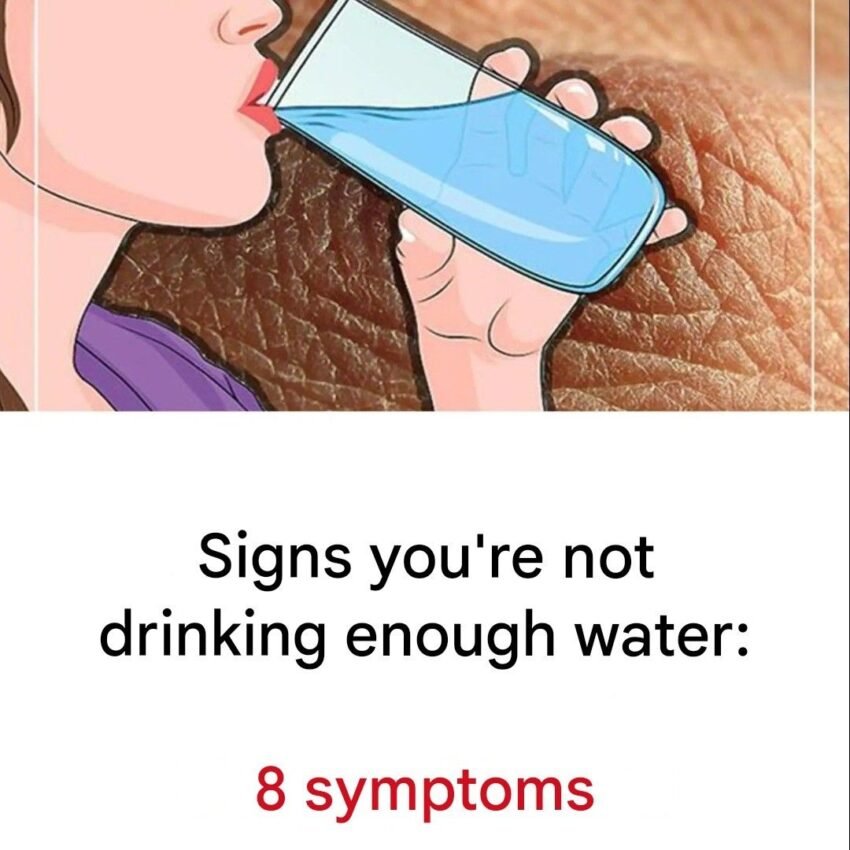
Not drinking enough water can quietly affect your energy, digestion, and overall health. Here are the common signs of dehydration to watch for:
1. Dark or Strong-Smelling Urine
- Clear or light-yellow urine usually indicates proper hydration.
- Dark yellow or amber urine → your body is conserving water.
2. Dry Mouth or Bad Breath
- Saliva production drops when dehydrated, causing a sticky, dry feeling or halitosis.
3. Fatigue or Low Energy
- Even mild dehydration can make you feel tired, sluggish, or foggy.
- Brain function and concentration can decline.
4. Headaches
- Dehydration can reduce blood flow and oxygen to the brain → migraine-like or dull headaches.
5. Dry Skin
- Skin may appear flaky, less elastic, or dull when you’re not drinking enough.
6. Constipation
- Water helps move food through the intestines; dehydration → hard, infrequent stools.
7. Muscle Cramps
- Lack of fluids can disrupt electrolyte balance → cramping or spasms, especially during exercise.
8. Dizziness or Lightheadedness
- Especially when standing up quickly (orthostatic hypotension) due to lower blood volume.
9. Rapid Heartbeat or Breathing
- The heart works harder to maintain blood pressure when fluids are low.
💧 Tips to Stay Hydrated
- Drink 6–8 glasses of water a day (more if active or in hot climates).
- Include water-rich foods: cucumbers, oranges, watermelon.
- Track intake if you forget; use a water bottle or app.
- Start the day with a glass of water to replenish overnight loss.
✅ Bottom line:
Even mild dehydration can affect your energy, mood, and bodily functions. Listening to your body’s signals and drinking regularly keeps you alert and healthy.
If you want, I can make a quick guide to “hydration hacks”—easy ways to stay fully hydrated even if you hate plain water.
